

A LIFE IN PROGRESS
From a pig farm in northern Saskatchewan, Canada, to the frontier of global investment, emerging technologies and enterprise, built on one conviction: given the chance, people can build their own future.
-
ORIGIN AND FORMATIVE YEARS

I was born on May 25, 1961, the day President John F. Kennedy challenged America to land a man on the moon before the decade was out. I was a little too young to listen to that speech, but I grew up believing something close to its spirit: that technology, directed with enough ambition, can deliver on the promise of a better future for all.
Home was a small pig farm outside the village of Lashburn, in northern Saskatchewan. Our closest neighbours were miles away, which meant our family had to rely on each other for pretty much everything. Early on, I understood that our family was a team, and if we all pulled together and focused on a common goal, we might not reach the moon, but we’d get where we needed to go.
My father was a born entrepreneur, and he taught me that the worst day of working for yourself was better than the best day working for someone else. He didn’t just say it – he built it into how we grew up. Every year, my siblings and I were each given a piglet to raise ourselves. When it was grown and sold, the spoils were ours to keep. Reward followed effort, every time. And that lesson never left me.
-
THE JOURNEY
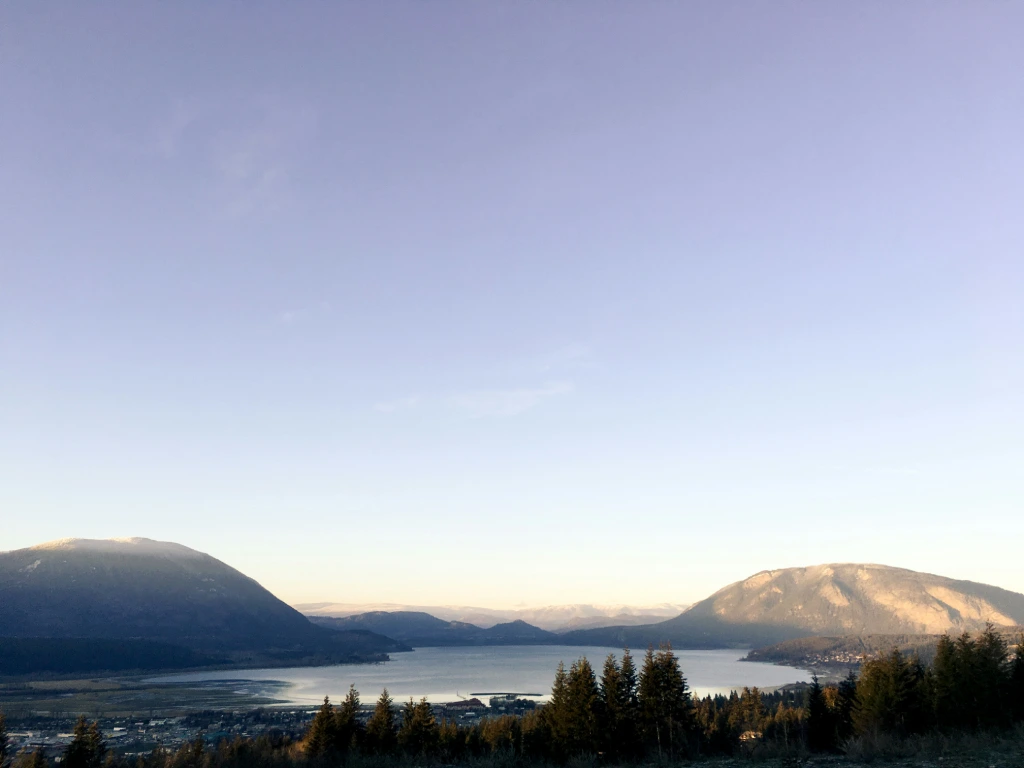
We later moved to Salmon Arm, British Columbia, a region dominated by orchards that ended up playing a key role in my early entrepreneurial efforts. I was always a voracious reader and a keen student, scoring the highest average exam marks of my high school graduating class. But a rough patch left my family unable to fund university. If I wanted a degree, I’d have to pay for it myself.
So, I got my mother to co-sign a loan, which I used to rent a big truck, loaded it up with local fruit, and drove it back up to Lashburn, where such commodities were scarce. I sold the whole load in 24 hours. I did it again. And again, the following summer; enough, each time, to cover a year of tuition. Nobody needed to spell out the upside of entrepreneurship to me after that. I’d already banked the proof.
-
CAREER AND ENTREPRENEURSHIP
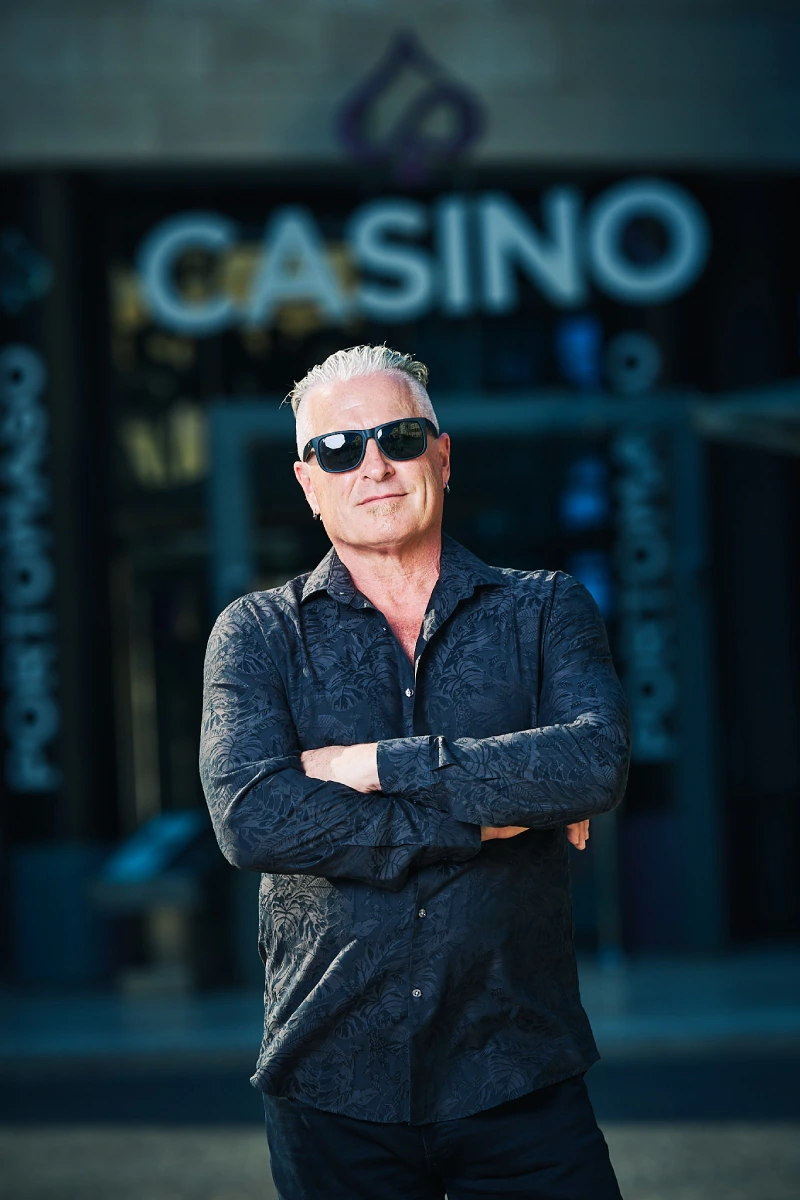
By the time I earned my MBA, I’d gotten involved in commercial real estate in Vancouver and heard about a vacant two-floor office space next door to a university that had the city’s only high-speed internet connection. I talked my way onto that connection, and pretty soon, my ‘HQ Vancouver’ became the hub for early tech startups.
I viewed the internet like the development of the wheel, something that would forever change the world for the better. There was no map to this brave new world, but my exposure to so many early efforts to build digital businesses offered insights into what did and didn’t work online.
Then I read about a guy in the Caribbean taking sports bets over the phone, and it hit me: this would work far better online. Betting is two things in motion: data and money. There’s no physical product to be manufactured, warehoused or shipped.
The online gambling industry didn’t exist at the time but I knew others might soon spot this same opportunity. If I acted swiftly, I could get in on, if not the ground floor, then at least the mezzanine. So I sold nearly everything I owned and launched my online gambling technology business.
I set about signing up operators in the Caribbean but, as is typical of many evolving sectors, most of the old-school guys who’d established phone-only betting operations either couldn’t or didn’t want to see the immense opportunity staring them in the face. One told me I was crazy for even suggesting it.
I eventually convinced a few clients to take the chance, and while I was running their online operations, I was also building the foundation of my own customer-facing business. Not long after, I decided it was time to let the clients go and launch my own site. But what to call it?
After spending a long night banging various words into a trademark search site, I settled on Bodog. People asked me what it meant. I told them, honestly, that it meant nothing. But that meant it could mean anything I wanted it to mean.
I deliberately avoided a name with ‘bet’ or ‘sports’ in it because I had ambitions far beyond gambling. My model was Richard Branson’s Virgin – a flexible brand, with endless directions.
Bodog became not only a gambling site but also a record label, mixed martial arts league, TV production unit, an annual conference series in Las Vegas, and more. All of it was aimed at the same audience the gambling brand already had. And it worked exactly as planned.
I put myself front and centre of the marketing, partly because it was the cheapest advertising I had, and partly because it mattered more than that: this was a largely faceless industry at the time, run by operators who preferred the shadows. Putting my face on it gave customers someone to trust, and someone to hold accountable if we ever gave them a reason not to.
-
MAJOR ACCOMPLISHMENTS
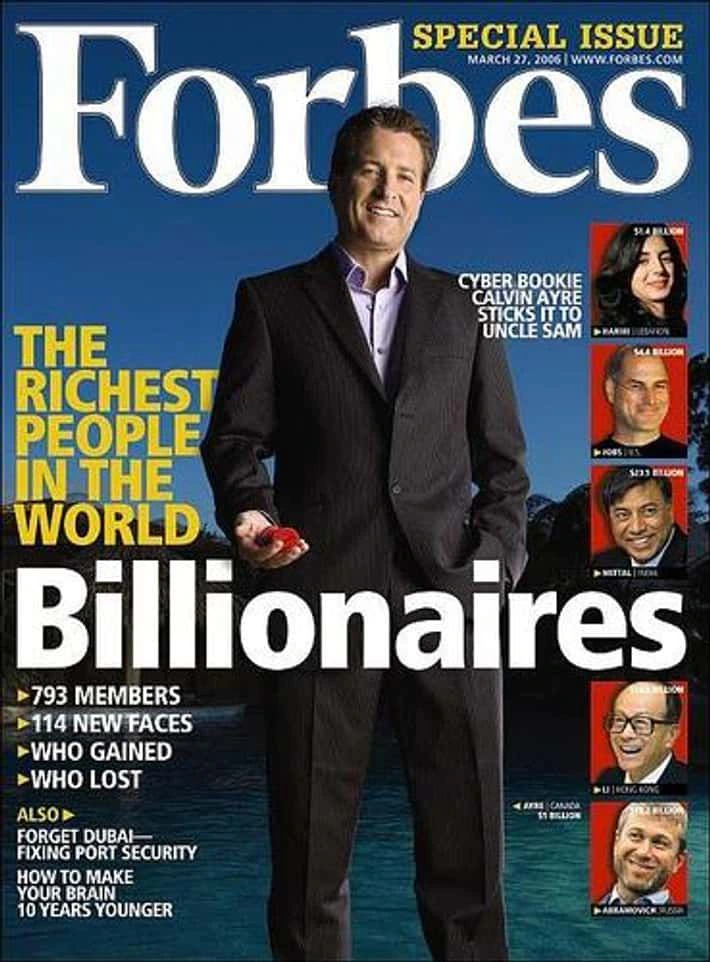
The visibility compounded: VH1’s Fabulous Life of…, People magazine’s ‘hottest bachelors’ list, the cover of Forbes’ ‘billionaires’ issue. By 2007, I felt I’d more than accomplished what I’d set out to do. I stepped back from day-to-day Bodog operations that year, licensing the brand to other operators instead.
That freedom let me build elsewhere. Having fallen in love with Antigua during my travels, I moved here in 2006 and became a citizen in 2013 the old-fashioned way, by establishing a residence and living here long enough to meet the requirements of the Immigration Act.
Through the Ayre Group, my long-term investment group, I built Canada Place, a five-story office complex with the island’s largest solar panel array. We launched a commercial helicopter service (CalvinAir) offering VIP services, search & rescue operations and emergency medical airlifts. And in 2024, we broke ground on the Nikki Beach Resort & Spa Antigua, a $400-million-plus development marking the Nikki Beach brand’s first project in the Western Hemisphere.
-
TECHNOLOGY AND INNOVATION
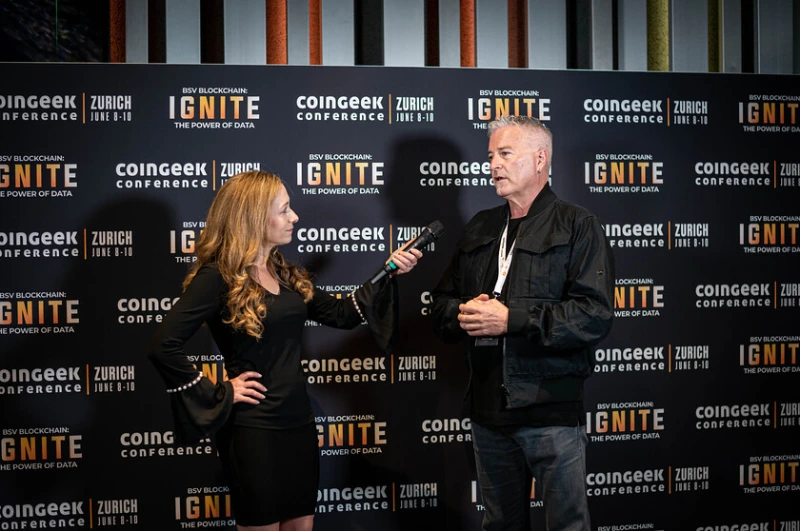
Payments were always the hard part of the gambling business, given that banks and processors got nervous handling the transactions. That’s what pulled me toward Bitcoin early. I wrote about it enthusiastically in 2011, and I still believe what I believed then, even if my reasoning has shifted since.
I originally saw Bitcoin the way most people did – as peer-to-peer digital cash. But as often occurs when new technologies emerge, in time I came to see Bitcoin as something bigger: a platform capable of carrying almost any kind of data, provided it was allowed to scale the way it was designed to. When the protocol’s gatekeepers refused to let that happen, I backed the people committed to honouring the original plan, which is what led me to Bitcoin Satoshi Vision (BSV blockchain). BSV blockchain’s protocol has no upper limit on blockchain size, giving builders both the stability and the room they need to take an idea from concept to reality. To make sure that view had a voice, I launched CoinGeek.com and, later, a global emerging technology conference series.
-
INVESTMENT PHILOSOPHY
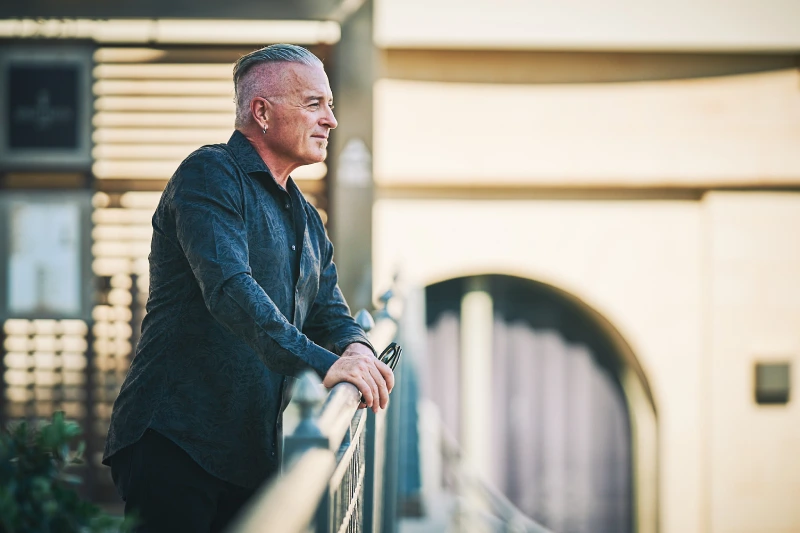
Through Ayre Group and the broader capital I now deploy alongside institutional managers and founders, I back conviction over consensus across a deliberately wide field: the rearmament reshaping defence and governmental technology, the industrialization of space, the next generation of healthcare and biotech, the robotics now moving out of research labs and onto factory floors, and the software and logistics infrastructure quietly running the modern economy. Blockchain and digital assets remain part of that picture too, but as infrastructure rather than speculation, and where my investing instincts first sharpened rather than where they stayed.
What ties it together isn’t the sector, it’s the instinct. I look for the same thing I once found in a vacant office space next to a university: builders working close to a shift before most people can see it coming, with the discipline to survive long enough to be right. Most founders already have what it takes; what they need is capital patient enough to back that conviction and stick around for the outcome, not the news cycle.
-
PHILANTHROPY AND SOCIAL IMPACT
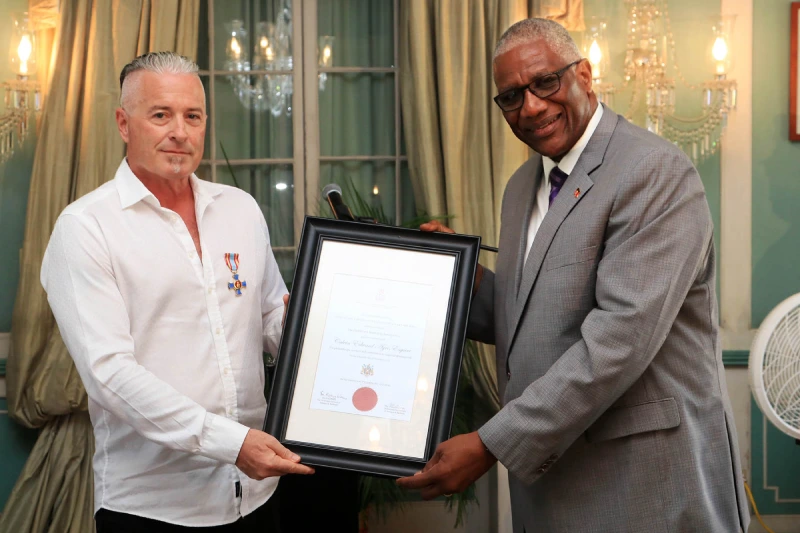
In 2005, I launched the Calvin Ayre Foundation, a philanthropic group founded on the principle that those who have been fortunate enough to enjoy great success have an obligation to share some of that success with those who have been less fortunate.
The Foundation focuses on a few select areas, including social development, emergency response and education. Education was the key to my own success, as a few of my early teachers encouraged my love of reading, giving me positive reinforcement that helped set me on the path I walk today. Education empowers individuals to write their own success stories, and its long-term impact can ripple outward to help lift families and even entire communities.
-
PERSONAL PASSIONS AND INTERESTS
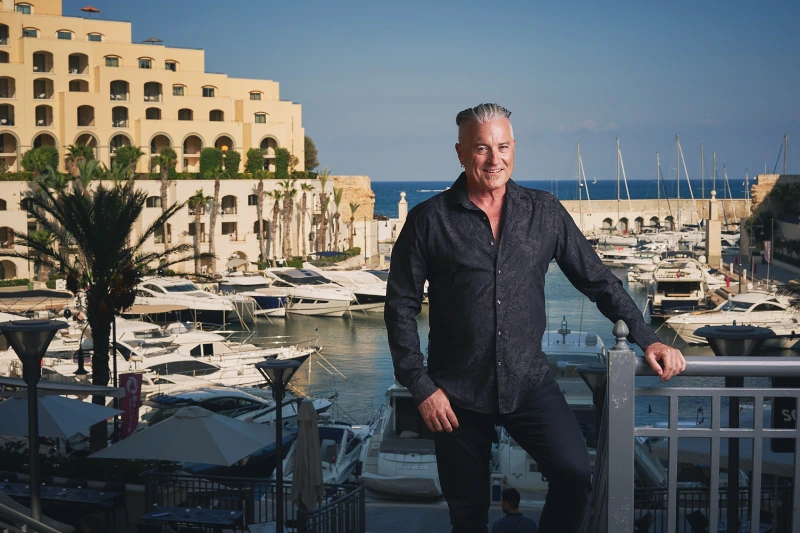
Property design became a genuine passion of mine almost by accident, after building the “Bodog Compound” in Costa Rica, a project MTV once turned into a Cribs episode. As I put down roots in other countries that interest, and the scale of what I wanted to build, only grew. Antigua has become the clearest expression of it: buildings meant to last, built with real ambition behind them.
The original Bodog philosophy of ‘work hard, play hard’ was an extension of my own personality, so you can still find me wakeboarding, doing backflips off boats, and enjoying fine wine with good friends in exotic locales. But I also train and think about longevity, because there’s still more to build, and I intend to be around to do it.
-
VALUES AND BELIEFS
Everything traces back to the same handful of convictions: that a family, or a team, gets further pulling together than apart; that effort should be tied directly to reward; and that self-reliance beats waiting for permission. I learned it raising a piglet. I proved it hauling fruit up a highway at nineteen. I’ve built a career, and now a Foundation, on the belief that most people already have what they need, they just need the chance to use it.
-
VISION FOR THE FUTURE
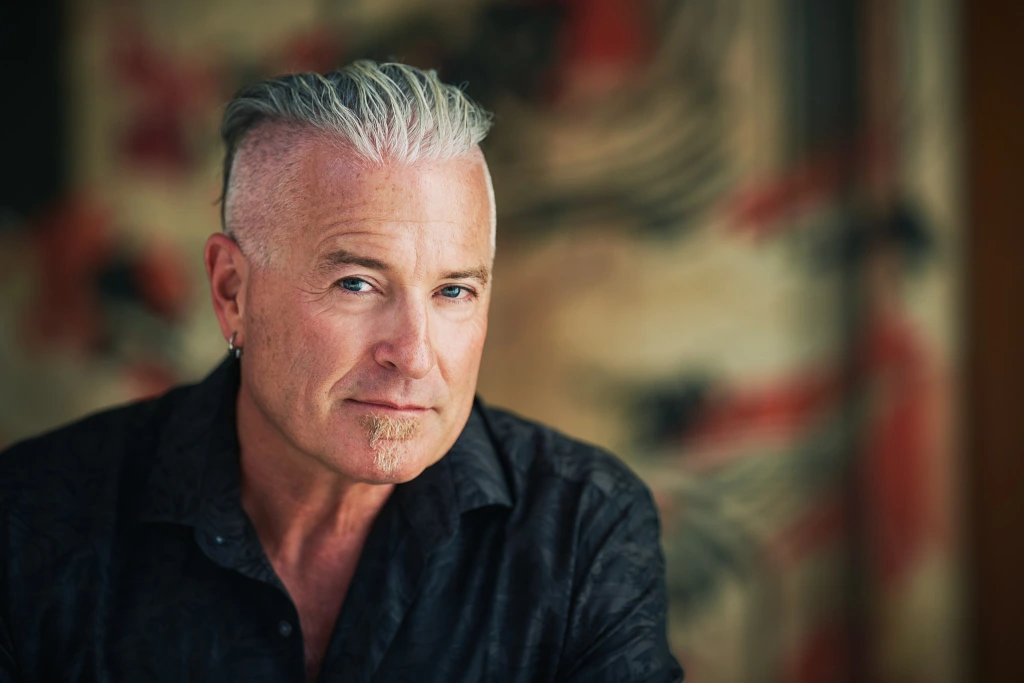
I’ve technically reached ‘retirement’ age. I have no intention of acting like it. Technology doesn’t slow down, and neither do I plan to. I want to keep seeing where it goes, and keep helping push it there, connecting people through the tools that make that possible.
My life has been a hell of a ride and my eyes remain fixed on the horizon and ready for whatever comes next, in service of the same idea I’ve carried since Lashburn: to empower human progress, and help build a better connected, more prosperous world for everyone.
-
WHO IS CALVIN AYRE TODAY
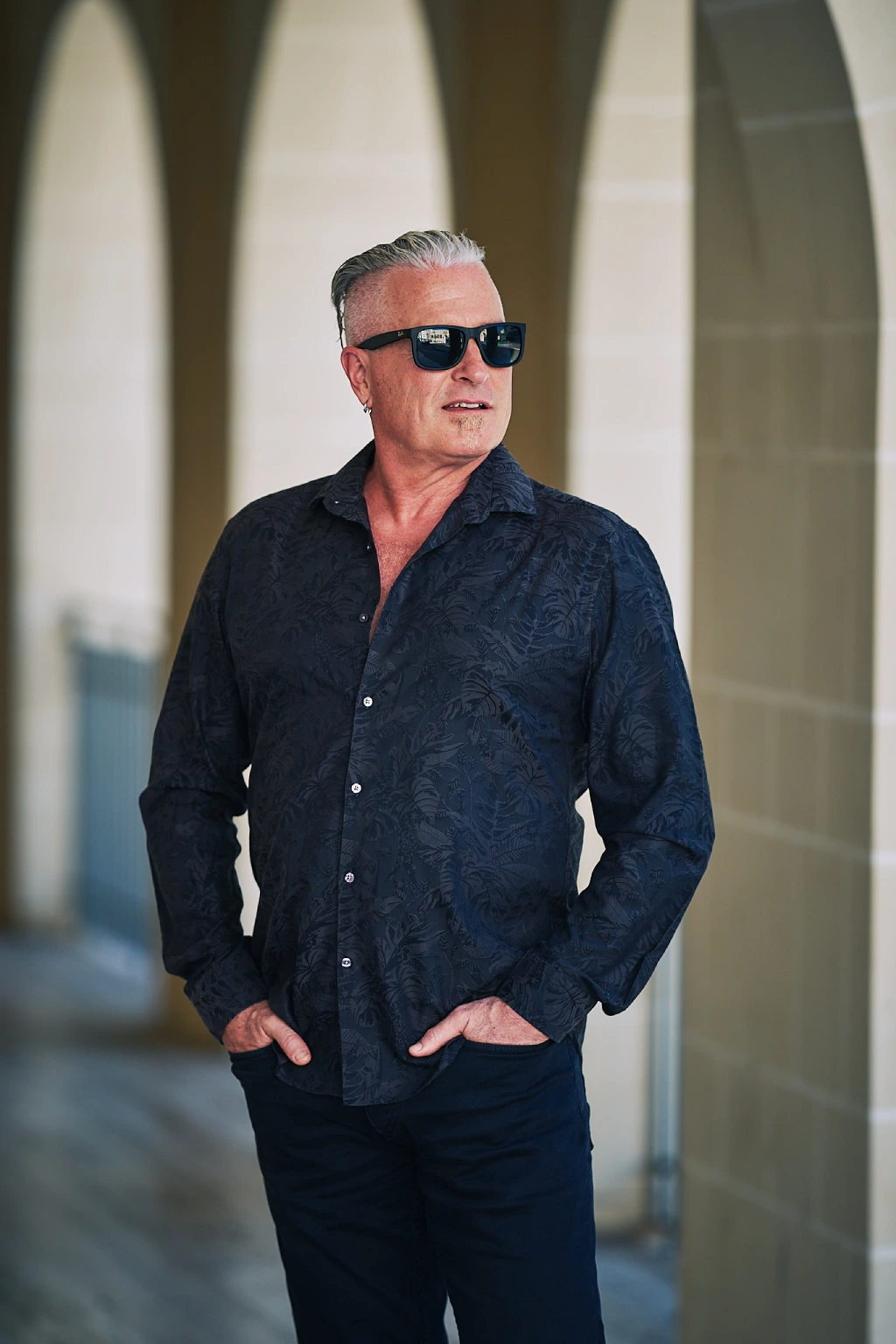
Calvin’s work spans five areas: long term investment across public companies, private businesses and real assets through Ayre Group; real estate development including Canada Place and the Nikki Beach Resort & Spa Antigua; a technology venture portfolio covering trust infrastructure, blockchain and fintech, centred on how to make a digital system something that people and institutions can actually rely on; the Think Tank, which explores how technology can advance inclusivity, connection, prosperity and progress, including an initiative supporting youth across the Commonwealth’s emerging economies in adopting AI; and philanthropy through the Calvin Ayre Foundation.
He became a citizen of Antigua and Barbuda in 2013 and has been an active investor there ever since. Ayre Group is the long-term investment group for Calvin Ayre’s business activities across public companies, private businesses and real assets. Calvin Ayre is its founder, and Ayre Group is the company that operates its own site at ayre.group.
The Calvin Ayre Foundation is the philanthropic foundation founded by Calvin Ayre supporting communities and charitable initiatives around the world. Its work focuses on education, healthcare, social development and disaster relief, particularly in Antigua and Barbuda.